
Crochet Hook Sizes: Complete Chart and Conversion Guide
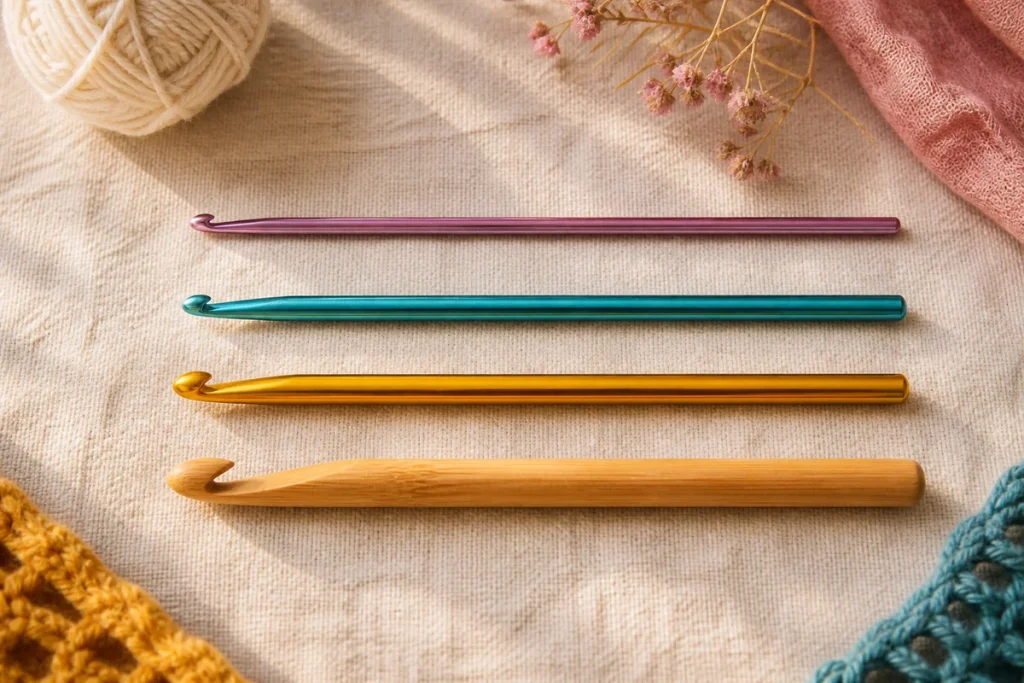
The number that matters most on a crochet hook is its metric diameter. Use that measurement to compare hooks, then make a swatch because your hands, yarn, and stitch pattern determine the final gauge.
What crochet hook size means
The metric size is the diameter of the hook’s shaft, measured in millimeters. That shaft determines the approximate size of the working loops. The hook head, throat, handle, and material affect how the tool feels, but they do not change the labeled shaft diameter.
A larger hook generally makes larger loops and a looser fabric with the same yarn and crocheter. A smaller hook generally makes tighter, denser fabric. Your own tension is part of the result, which is why a pattern’s stated hook is a starting point and the required gauge is the real target.
Common metric and U.S. crochet hook sizes
The chart below lists widely used conversions for regular yarn hooks. Because U.S. letter/number labels can vary by brand, confirm the millimeter marking printed on the hook or packaging.
| Metric diameter | Common U.S. label | Typical use range |
|---|---|---|
| 2.25 mm | B-1 | Fine yarn and detailed work |
| 2.75 mm | C-2 | Fine yarn |
| 3.25 mm | D-3 | Fine to light yarn |
| 3.5 mm | E-4 | Light yarn |
| 3.75 mm | F-5 | Light yarn |
| 4 mm | G-6 | Light to medium yarn |
| 4.5 mm | 7 | Medium yarn |
| 5 mm | H-8 | Medium yarn |
| 5.5 mm | I-9 | Medium yarn |
| 6 mm | J-10 | Medium to bulky yarn |
| 6.5 mm | K-10½ | Bulky yarn |
| 8 mm | L-11 | Bulky to super bulky yarn |
| 9 mm | M/N-13 | Super bulky yarn |
| 10 mm | N/P-15 | Super bulky yarn |
| 15 mm | P/Q | Jumbo yarn |
How to choose the right hook size
- Start with the pattern. Use the metric size listed by the designer.
- Check the yarn. The label’s suggested hook range can help when no pattern is involved, but it cannot predict every stitch pattern or desired fabric.
- Make a swatch. Wash and dry it as the finished item will be treated when gauge or drape matters.
- Evaluate both measurement and fabric. A swatch can meet the numbers yet feel too stiff or open for the project.
- Change one variable at a time. If stitches are too small and dense, test a larger hook; if too large and loose, test a smaller one.
For a first practice session, smooth category 4 yarn and a hook near the label’s middle recommendation are easier to see and control than very fine yarn. Read yarn weights explained before substituting yarn.
Hook materials, head styles, and handles
| Feature | What it changes | Useful when |
|---|---|---|
| Aluminum | Smooth, light, and widely available | You want a versatile first hook |
| Wood or bamboo | Often creates more surface friction | Very slippery yarn keeps escaping |
| Plastic or resin | Lightweight and common in large sizes | You need a large hook without much weight |
| Ergonomic handle | Adds a wider grip but does not change shaft size | A narrow shaft is uncomfortable to hold |
| Inline or tapered head | Changes the shape of the throat and hook entry | One style feels easier with your grip and yarn |
No material or head shape is objectively best for everyone. Test one hook through several rows before buying a full set.
How hook size changes crochet gauge
Hook size affects both stitch width and stitch height, but not always by the same amount. Moving up one size may correct stitch count while row count remains different. You may need to adjust stitch technique or row count as well as hook size. Follow the full process in the crochet gauge guide.
Steel crochet hooks use a different sizing system
Small steel hooks are designed for crochet thread and use numbered sizing systems that run differently from regular yarn-hook labels. In common U.S. steel sizing, a larger number generally means a smaller hook. Because manufacturer ranges vary, use the millimeter size as your reliable reference and do not apply the regular B-through-Q conversion chart to steel hooks.
Frequently asked hook questions
What size crochet hook should a beginner use?
Match the hook to a smooth, medium yarn. A 5 mm or 5.5 mm hook is common for practice, but the yarn label and your resulting fabric matter more than a universal beginner size.
What happens if I use a larger hook?
With the same yarn and stitch, loops generally become larger, gauge becomes looser, and fabric becomes more open and flexible. Always swatch for a size-sensitive project.
Can I use a different hook from the pattern?
Yes, if the substitute helps you match the specified gauge and fabric. The designer’s hook is not a guarantee that every crocheter will get identical measurements.
Why does my hook have only a letter?
Some U.S. hooks emphasize the letter or number label. Measure with a hook gauge or check the manufacturer’s chart to confirm the metric diameter.
Sources and standards
Technical terminology and sizing were checked against the following references:

